Roof Repair · the USA
Crews follow a written sequence that begins with moisture mapping and ends with a documented water test during roof maintenance. Material choices are recorded so that future work can reference what was installed.
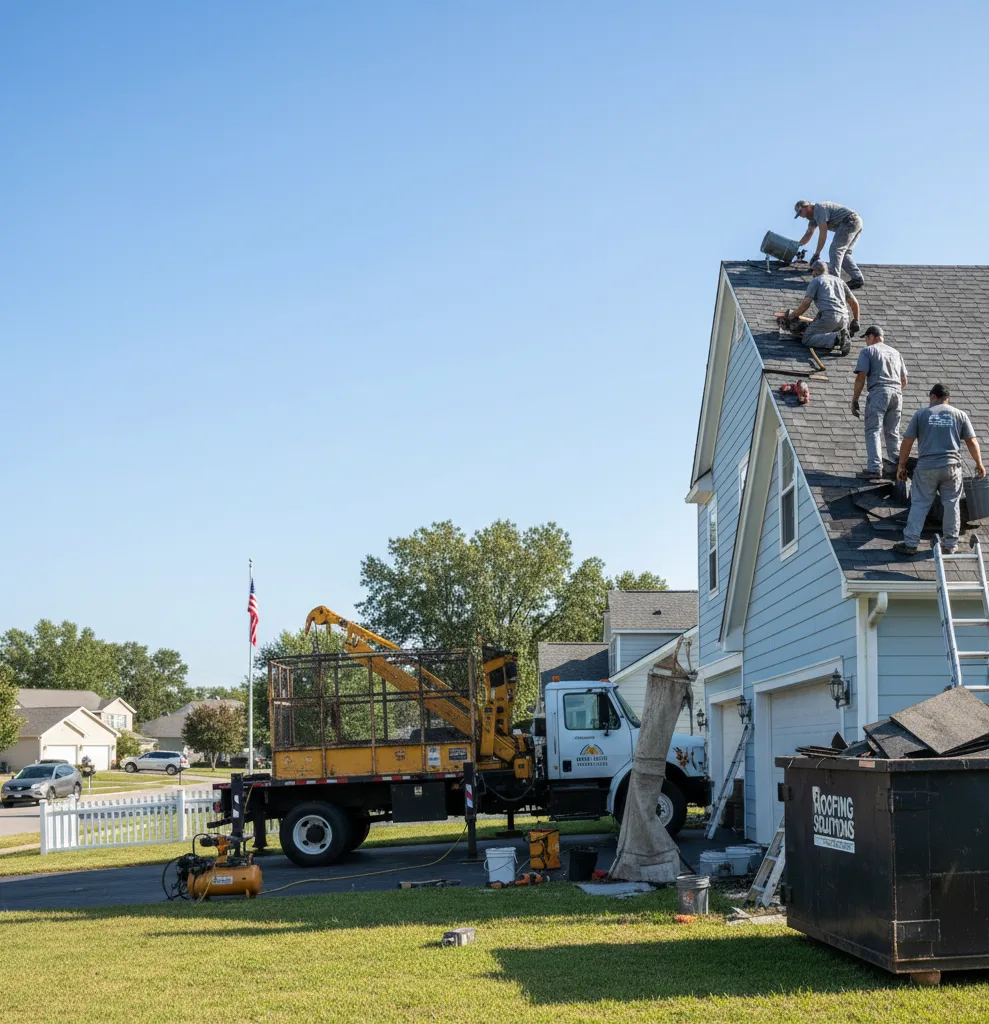
Roof leaks often show first as water intrusion with discoloration along ceiling seams or around attic vents. They trace the water back by checking shingle alignment, ridge cap condition, and valley metal seams. When saturation is confirmed, affected sections are isolated so that only the compromised area is opened rather than an entire slope. Shingle replacement proceeds by lifting adjacent courses carefully to preserve the seal on sound material, then installing new underlayment and fasteners rated for the local wind zone. The process ends with a perimeter check to confirm that no new gaps were created during removal.
Ice dam formation, repeated thermal expansion, and wind-driven debris each produce distinct wear patterns on fasteners and flashing. Crews note the age of existing sealant beads and the condition of step flashing where walls meet the roof plane. Homeowners can observe granule loss in gutters or lifted tab edges after storm damage, both of which signal that the surface layer is no longer shedding water effectively. Recording these observations before a roof inspection helps crews prepare the correct gauge of replacement metal and sealant type.
FAQ

A surface patch can stop immediate entry but does not always address the path water took to reach that point. An inspection often includes checking the decking beneath the shingles and the condition of nearby flashing. If the underlayment has deteriorated or the leak has traveled along rafters, additional sections may need attention to prevent recurrence in adjacent areas.
Material compatibility, fastening patterns, and sealant choice all play a role in how the repaired area holds up over time. Matching the existing underlayment type and ensuring proper overlap at seams reduces the chance of new entry points forming nearby. Weather exposure after the work also influences longevity, particularly on slopes that receive direct sun or prevailing wind.
Small sealant touch-ups on accessible flashing are sometimes done by owners, but any work above single-story height introduces fall risks and potential warranty issues on the existing roof. Professional crews carry the proper safety equipment and know how to avoid disturbing sound sections while accessing the problem area. A quick assessment can clarify whether the situation requires immediate professional attention or can wait for scheduled maintenance.